
This is the first in a series of posts about invasive species that threaten New Hampshire lakes. We’re starting with one of the most common and concerning: Variable Milfoil. While we do not have this plant in Partridge Lake, it’s widespread in NH and important for us to know how to recognize it.
Why should we care?
Variable milfoil is one of the most destructive invasive plants in New Hampshire waters. If introduced, it can:
- Form thick mats that block out native plants and harm fish habitat
- Make swimming, boating, and fishing difficult
- Lower water quality and overall lake health
How to recognize it
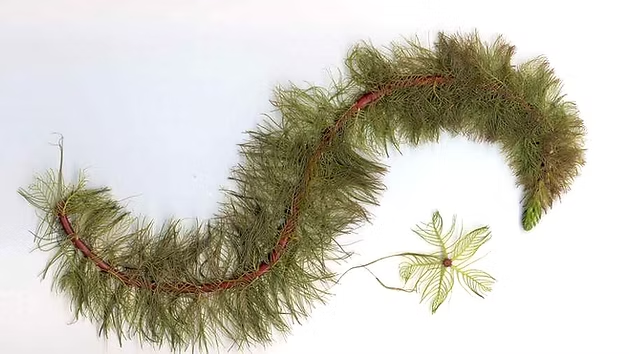
- Long, stringy green stems
- Whorls of 4–5 feathery leaves around the stem, soft and fan-like (like a bottlebrush)
- Can grow up to 15 feet tall under the water
See photos of variable here: https://share.google/images/ghGyaT9707l5epMqt
Where it’s typically found
Milfoil usually takes hold in shallow water, coves, and along shorelines where boat traffic, water currents, or wildlife can spread fragments, but it can grow down as deep as sunlight can penetrate.
How to tell it apart from native look-alikes
- Feather-like leaves in whorls of 4–6 around the stem.
- Leaflet count usually less than 12 pairs
- Stiff, bushy stems, often reddish or green, forming dense clumps reminiscent of a “squirrel tail.”
- Contrast with native milfoils—less dense, fewer leaflets, and more delicate.
Good vs bad milfoil comparison:
Variable milfoil (invasive)
Leaves are feathery with 7–11 leaflet pairs on each leaf. Plants often look denser and “bushier.”
Native milfoils (like whorled water milfoil)
Leaves usually have fewer leaflet pairs (5 or less) and appear more delicate or sparse. (there is plenty of this type in Partridge Lake)
Photos: https://share.google/images/jyPWIxpi4PWue7tGJ
A quick tip: If it looks especially dense and “fluffy,” it’s more likely the invasive kind.
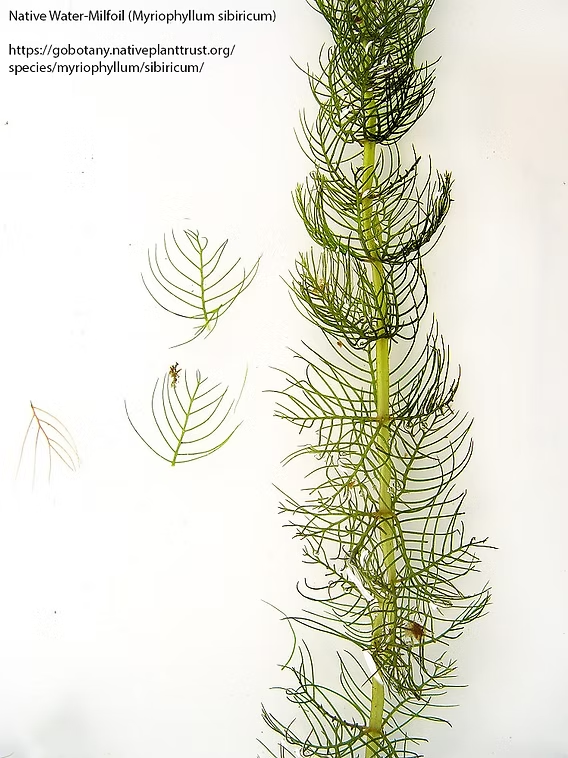
Three common native plants that are often misidentified as variable milfoil are bladderwort, elodea, and water marigold:
- Bladderwort: Has branching or forking foliage with small “bladders” visible on the stems—not feather-like milfoil leaves. Mature bladderwort leaves may superficially resemble milfoil, but the branching pattern and bladder structures are distinct.
- Elodea: Features small, leaf-like foliage that is noticeably different from milfoil, and it lacks the feathery structure altogether.
- Water marigold: plants about a foot tall, leaves whorled around the main stem, low growing
How you can help
The best defense is early detection—and that means many eyes on the lake. If you spot something that looks suspicious:
- Note the location (cove, near dock, shoreline, etc.)
- Snap a quick photo if possible and Email to Lila or Liz at: Weedwatchers@partridgelake.org.
Crowdsourcing our lake monitoring gives us the best chance of keeping Partridge Lake free from invasive species.
Stay tuned for more posts in this series as we learn about other invasives to be on the lookout and please don’t hesitate to contact us with any questions you might have.
Thank you!
Liz and Lila
Partridge Lake Weed Watcher Committee
